Knee pain can happen after a sudden twist, a sports injury, or even an ordinary movement such as squatting or standing up. However, when the discomfort comes with swelling, catching, clicking, or difficulty moving the joint, torn meniscus symptoms may be part of the problem. A meniscus tear is one of the more common knee injuries, and the symptoms can range from mild irritation to significant trouble walking or straightening the leg.
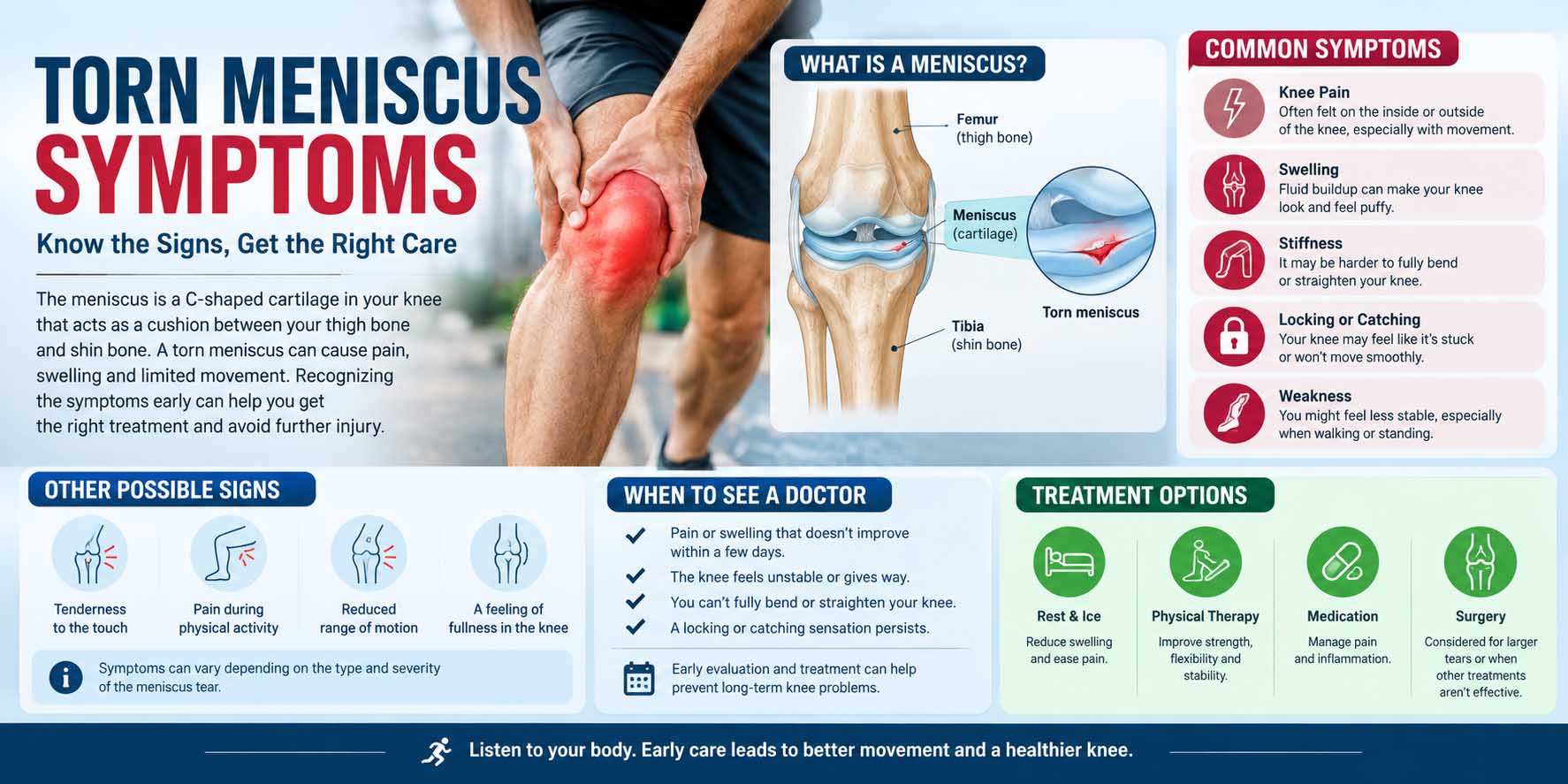
The meniscus is a piece of tough, rubbery cartilage that helps cushion and stabilize the knee. Each knee has two menisci: one on the inner side and one on the outer side. Together, they help distribute force between the thighbone and shinbone.
Not every meniscus tear feels the same. Some people can still walk after the injury, while others develop swelling and pain that gradually worsen over the next day or two. Understanding the warning signs can help you know when simple home care may be reasonable and when it is time to seek medical attention.
Common Torn Meniscus Symptoms to Watch For
The most common torn meniscus symptoms involve pain, swelling, stiffness, and changes in how the knee moves. Symptoms often depend on the size, location, and type of tear.
A sudden injury may produce immediate discomfort. On the other hand, tears related to gradual wear and aging may develop without one memorable accident.
Common signs include:
- Pain along the inner or outer side of the knee
- Swelling or puffiness around the joint
- Stiffness and reduced range of motion
- A clicking, popping, or catching sensation
- A feeling that the knee is giving way
- Knee locking, where movement becomes temporarily blocked
- Pain during twisting, squatting, or pivoting
Knee Pain That Changes With Movement
Pain is one of the most recognizable torn meniscus symptoms knee complaints. The discomfort may occur along the joint line, although some people describe a deeper ache inside the knee.
Twisting or rotating the knee can make the pain worse because these movements place stress on the damaged cartilage. Squatting, kneeling, climbing stairs, and getting up from a low chair may also become uncomfortable.
The location of pain can vary. A tear in the medial meniscus may cause discomfort on the inner side of the knee, while a lateral meniscus injury may cause pain toward the outer side.
Swelling and Stiffness
Swelling does not always appear immediately. In some cases, fluid gradually builds up in the joint over several hours or days.
As swelling increases, the knee may feel tight or stiff. This can make it harder to bend or straighten the leg normally.
Because many knee problems can cause swelling, this symptom alone cannot confirm a meniscus tear. Ligament injuries, arthritis, tendon problems, and other conditions can also produce similar changes.
Catching, Clicking, or Locking
Some symptoms of torn meniscus involve mechanical problems inside the joint. A damaged piece of cartilage can interfere with normal knee movement and create a catching or clicking sensation.
A more serious mechanical symptom is locking. This can happen when the knee becomes difficult or impossible to fully straighten or bend because torn tissue interferes with movement.
True locking should be evaluated by a healthcare professional, especially if the knee repeatedly becomes stuck.
A Feeling of Instability
Some people feel as if the knee might buckle or give way. This may happen because pain and swelling interfere with normal muscle control, although instability can also occur with ligament injuries.
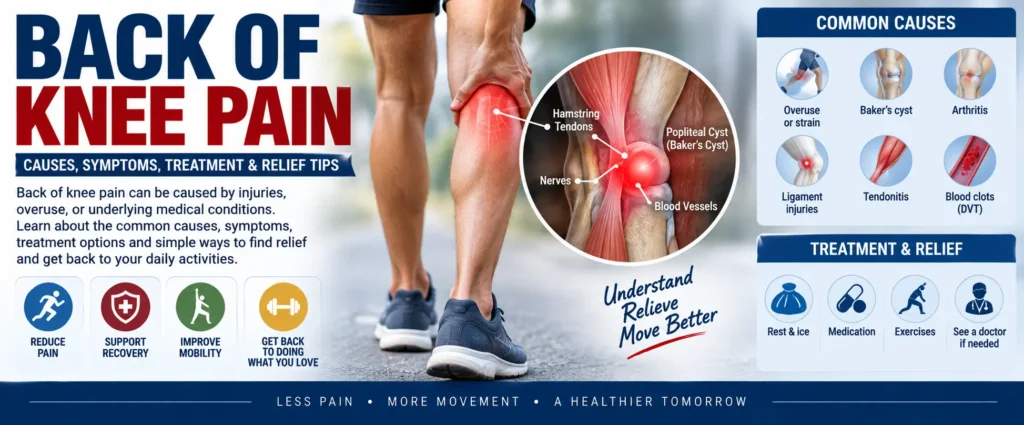
If knee discomfort is concentrated toward the back of the joint, pain behind knee may have several possible causes. A meniscus injury is one possibility, but tendon problems, cysts, arthritis, and other conditions can also cause pain in that area.
Symptoms of a Torn Meniscus Can Be Mild or Severe
The symptoms of a torn meniscus do not always match the severity of the damage. A small tear may cause significant pain, while another person with a larger tear may initially notice only mild discomfort.
Several factors influence how the injury feels.
The Type and Location of the Tear
The meniscus has areas with different blood supplies. Tears near the outer edge may have a better healing potential than tears in the inner portion, which receives less blood flow.
The shape of the tear also matters. Some tears remain relatively stable, while others can move and interfere with normal knee motion.
Acute Injury Versus Gradual Degeneration
A sudden meniscus tear often happens during sports or other activities that involve twisting or pivoting. However, degenerative tears can develop gradually as the cartilage becomes less resilient with age.
In these cases, a relatively simple movement may trigger symptoms. Someone may notice knee pain after squatting, stepping awkwardly, or standing up, even without a major accident.
What Causes a Torn Meniscus?
A meniscus can tear when the knee twists while supporting body weight. This is common in sports such as football, basketball, soccer, and tennis.
Common causes include:
- Sudden twisting or pivoting
- Deep squatting
- Forceful kneeling
- Rapid changes in direction
- A direct impact to the knee
- Lifting or turning while the foot is planted
- Age-related degeneration of knee cartilage
Meniscus tears can also occur alongside other injuries, including damage to the anterior cruciate ligament, or ACL.
Older adults may develop a tear through normal wear and tear rather than a single traumatic event. For this reason, the absence of a major injury does not rule out a meniscus problem.
Torn Meniscus Symptoms Test: What Doctors Look For
There is no reliable torn meniscus symptoms test that can diagnose every tear at home. While certain movements may trigger pain or catching, self-testing cannot determine the exact type or location of an injury.
A healthcare professional usually combines your symptom history with a physical examination.
Physical Examination
During an examination, a clinician may check:
- Where the knee is tender
- Whether swelling is present
- How far the knee can bend and straighten
- Whether twisting movements cause pain
- Whether the joint catches or locks
- Whether other structures, such as ligaments, may also be injured
Several clinical maneuvers can help raise or lower suspicion for a meniscus tear. However, no single examination technique is perfect on its own.
Imaging Tests
An X-ray cannot directly show a meniscus tear, but it can help rule out fractures and reveal signs of arthritis or other bone problems.
Magnetic resonance imaging, or MRI, is often used when a clinician needs a clearer view of the meniscus and other soft tissues inside the knee.
Imaging results should always be considered alongside symptoms and the physical examination. Some people have meniscus changes visible on MRI without those findings being the true cause of their knee pain.
When to Seek Medical Care
Mild knee pain after activity may improve with rest and reduced strain. Still, certain torn meniscus symptoms deserve medical evaluation.
Contact a healthcare professional if you have:
- Severe or worsening knee pain
- Significant swelling
- Repeated catching or locking
- Inability to fully straighten the knee
- Difficulty bearing weight
- A knee that repeatedly gives way
- Symptoms that do not improve after a reasonable period of conservative care
Seek urgent medical attention after a serious injury if the knee looks deformed, you cannot bear weight, or you have severe swelling or other signs of a significant injury.
A painful foot is not usually caused by a meniscus tear, so top of foot pain may point to a separate problem involving the foot or ankle and should be assessed based on its own symptoms and possible causes.
How Is a Torn Meniscus Treated?
Treatment depends on the type of tear, its location, your symptoms, activity level, age, and the overall condition of the knee.
Not every meniscus tear requires surgery.
Conservative Treatment
For some people, treatment begins with reducing activities that worsen pain. A healthcare professional may recommend a combination of rest, ice, compression, elevation, and temporary activity modification.
Physical therapy can also play a valuable role. Exercises may focus on restoring knee movement, improving strength, and helping the muscles around the knee better support the joint.
Pain-relieving or anti-inflammatory medicines may be appropriate for some people, although they are not suitable for everyone. It is wise to check with a qualified healthcare professional if you have medical conditions, take regular medications, or are unsure which option is safe.
When Surgery May Be Considered
Surgery may be considered when symptoms persist despite appropriate conservative treatment or when a tear causes significant mechanical problems, such as repeated locking.
Depending on the injury, a surgeon may repair the meniscus or remove only the damaged portion when repair is not possible.
Whenever feasible, preserving meniscus tissue is generally desirable because the meniscus helps protect and distribute forces across the knee joint.
Recovery From a Meniscus Tear
Recovery varies widely. A minor tear treated without surgery may improve over several weeks, while recovery after a surgical repair can take several months.
Your timeline may depend on:
- The location and pattern of the tear
- Whether surgery is performed
- Whether the meniscus is repaired or partially removed
- Your strength and overall fitness
- Other knee injuries
- How closely rehabilitation instructions are followed
Returning to sports or intense exercise too early can increase the risk of ongoing symptoms or another injury. A gradual return based on pain, movement, strength, and professional guidance is usually safer than relying on a fixed calendar date.
Can You Prevent a Meniscus Tear?
Not every injury can be prevented, especially during sports or accidents. Still, good conditioning may reduce the risk of some knee injuries.
Useful habits include:
- Strengthening the muscles around the hips and knees
- Improving balance and coordination
- Warming up before intense activity
- Using proper movement technique
- Increasing training intensity gradually
- Wearing appropriate footwear for the activity
- Avoiding sudden increases in repetitive knee stress
If your knee already feels painful or unstable, pushing through intense exercise may worsen the problem. Modifying activity early can sometimes prevent further irritation.
Common Myths About Torn Meniscus Symptoms
“You always hear a pop.”
Not necessarily. Some people notice a popping sensation, but many meniscus tears occur without a dramatic sound.
“If you can walk, the injury cannot be serious.”
You may still be able to walk with a meniscus tear. In fact, some people remain active for days or weeks before seeking care.
“Every meniscus tear needs surgery.”
Many tears can be managed without surgery, depending on symptoms and the nature of the injury.
“An MRI alone decides treatment.”
MRI findings provide useful information, but treatment decisions also depend on symptoms, physical examination results, daily function, and the person’s goals.
Frequently Asked Questions
What are the first signs of a torn meniscus?
Early signs may include knee pain after twisting, swelling, stiffness, tenderness along the joint line, or discomfort during squatting and pivoting. Some people also notice catching or clicking.
Can torn meniscus symptoms come and go?
Yes. Symptoms can fluctuate depending on activity level, inflammation, and the position of the damaged tissue. Pain may improve temporarily and then return with twisting, deep bending, or strenuous activity.
Can you have a torn meniscus without swelling?
Yes. Swelling is common, but not everyone develops noticeable swelling, especially with smaller or degenerative tears.
Does a torn meniscus heal on its own?
Some tears, particularly those near the outer edge with a better blood supply, may have greater healing potential. Other tears are less likely to heal naturally. A healthcare professional can help determine the most appropriate approach.
How do I know if my knee pain is a torn meniscus?
Knee pain alone cannot confirm the diagnosis. Symptoms such as joint-line tenderness, swelling, catching, locking, and pain with twisting may raise suspicion, but a physical examination and, when appropriate, imaging are needed for a clearer diagnosis.
What to Do Next if You Notice Torn Meniscus Symptoms
If you notice torn meniscus symptoms, start by paying attention to how the injury happened and which movements trigger discomfort. Avoid activities that cause sharp pain, repeated catching, or instability.
For mild symptoms, temporary activity modification and appropriate conservative care may help. However, persistent pain, swelling, locking, or difficulty moving the knee normally should be assessed by a qualified healthcare professional.
The key is not to judge a knee injury only by whether you can still walk. A meniscus tear can range from a manageable source of discomfort to a problem that significantly affects movement. Getting an accurate diagnosis can help you choose the right treatment, protect the knee, and return to normal activity as safely as possible.